
It is April 9, 2026, 5:48 a.m. The temperature is 47º—cool for a spring morning in Georgia. It is still dark; the sun won’t rise for another hour. My cell phone is locked in my car, where it will remain untouched for the next 12 hours. I stand in a parking lot surrounded by thousands of visitors from around the world. Many carry folding green chairs. Some wear golf attire—much of it green. Others, optimistic about the 75º afternoon ahead, sport Bermuda shorts, sundresses and straw hats. Everyone is chatting, exchanging stories of where they’re from and how they arrived here. For this moment, we are bonded strangers, waiting for the gates of Augusta National Golf Club to open. The 2026 Masters Tournament is about to begin.
Attending the Masters has long been a bucket-list dream. Years ago, my husband and son brought me back a hat from Augusta—appreciated, but not the same as being here. Now it is my turn. With my phone locked away, I feel free, unencumbered, and ready for the day’s adventures. At 7 a.m., the gates open and the crowds stream in.

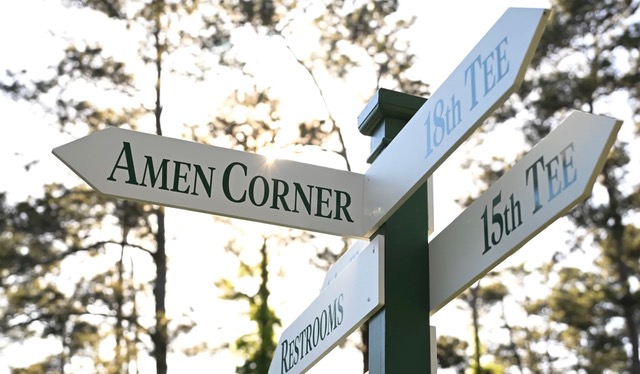
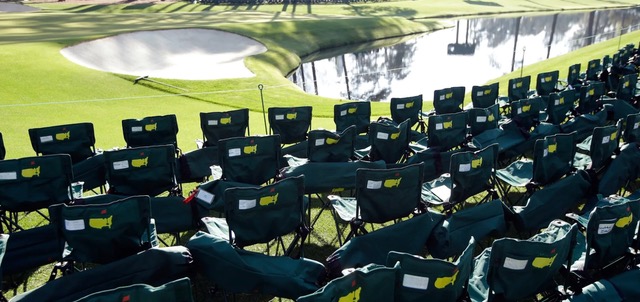
My friend and I are giddy, but we need to focus. First, we secure a spot for our chairs behind the 16th green, marking them with bandanas for easy identification. Then we set off across the quiet course, walking backward from 16 through Amen Corner—the famed stretch of holes 11, 12, and 13, where championships are won and lost. In the early morning stillness, without golfers or crowds, Augusta National reveals its full beauty: immaculate fairways, vibrant azaleas, and iconic landmarks we have seen on television. We continue toward the clubhouse, watch tee-offs at holes 1 and 2, then follow some of our favorite players. We stop briefly at Founder’s Circle for the day’s only photo—a digital memento we’ll retrieve later. (Note: the photos in this blog were found online and have been included to add color.)
The Masters stands alone as the only major sporting event with a strict ban on phones, cameras, and electronic devices. Violations can result in removal or even a permanent ban. In their place, patrons can use free pay phones—though we remain happily out of touch all day. This absence of technology transforms the experience. People engage face-to-face, fully present with one another and their surroundings.
Attending the Masters feels like stepping into a bygone era. That sense of tradition extends throughout the tournament, and little has changed in its 90-year history. Notably, there is no corporate presence anywhere on the premises—no sponsorship banners, no VIP corporate tents. Soft drinks are famously unbranded, served in commemorative plastic cups. The only visible logo across the entire property is that of the Masters itself.
Another long-time tradition is the use of the legendary manual scoreboards, updated by hand by a team of 280 volunteers. Working “backwards and blind,” the workers replace panels from behind the boards, often without seeing the action. Red numbers indicate under par, green over par, and yellow even par. Similar “thru-boards” dot the course, preserving the tournament’s old-school aesthetic.

Thousands of additional volunteers help run the event, all trained with a Disney-Esque commitment to hospitality. Everyone is friendly and helpful, offering directions, viewing tips, shopping advice and even food recommendations. Though unpaid, volunteers receive notable perks, including the chance to play Augusta in May, along with exclusive apparel and behind-the-scenes access to players and caddies. Positions are highly coveted, often filled through connections or recommendations. The result is a flawlessly run event with patrons well cared for. Despite large crowds, lines move quickly, help is always nearby, and the entire experience feels seamless.
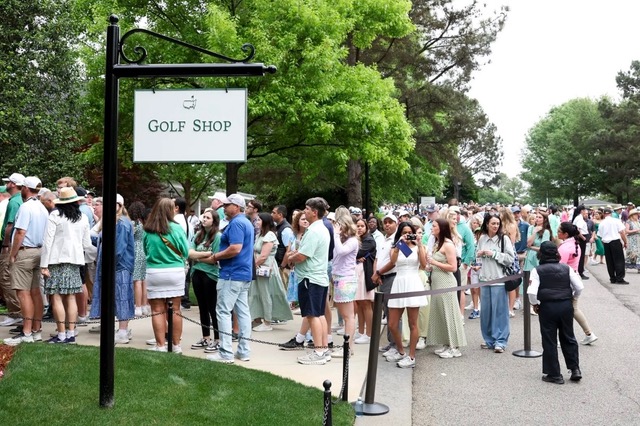
The Masters store is a shopping experience like no other. Patrons routinely wait 90 minutes or more to enter the golf shop; our 70-minute wait feels like a breeze. Without phones, people talk, connect, and laugh while waiting to spend—often generously. The shop generates an estimated $10 million per day (for perspective, a typical U.S. Walmart store yields approximately $1.5 million.) The average customer spends around $1,100 in the Masters shop. Inside, it’s a retail juggernaut: multiple rooms filled with apparel, accessories, and memorabilia. Many leave with armfuls of merchandise, including this season’s popular garden gnome.
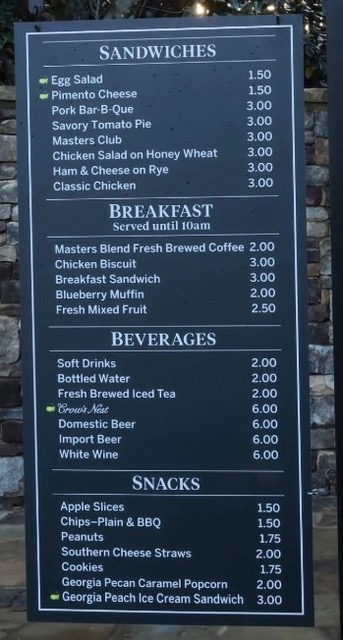
Fortunately, money spent in the golf shop is offset by remarkably low concession prices. For just over $70, one could sample the entire menu. For a mere $15, we purchase an egg salad sandwich, pimento cheese sandwich, fried chicken sandwich, chips, several drinks, and a Georgia Peach ice cream sandwich. Prices have remained largely unchanged for decades. The famous pimento cheese and egg salad sandwiches (both on white bread) have been priced at $1.50 since 2002. While I haven’t eaten white bread in over 50 years, this does not seem like the day for restraint, as I want to embrace the full Masters experience.

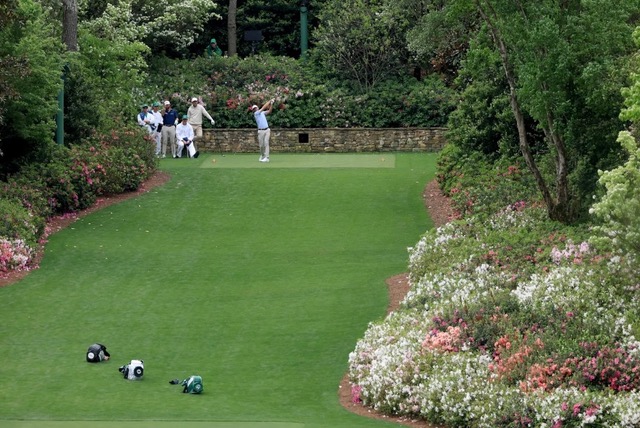
As our Augusta adventure stretches into late afternoon, we return to the chairs we’d placed by the 16th hole at 7 a.m. This renowned par-3 can yield a flurry of birdies for players chasing a strong finish. Instead, we witness many superb shots slide off the green, leaving birdies frustratingly out of reach. We end the day back at Amen Corner, where it had begun with a peaceful morning walk. Now the scene is electric as the final groups pass through and patrons crowd in to watch some of the top players take on these formidable holes.


Television does not adequately capture the hilly terrain of Augusta National. Walking the undulating course for nearly 12 hours provides an unexpected workout: 22,867 steps and 10.2 miles covered. A welcome bonus to counteract all the unhealthy food we have consumed!
Overall, the day far exceeds expectations. Seeing Augusta National in all its glory is surreal, but what truly sets it apart is the enforced detachment from technology. Without phones, there are no texts, emails, or social media— just the experience. At most events, people document more than they absorb; The Masters Tournament resists that. Every detail is intentional, creating a Zen-like atmosphere that rewards presence. For one day, everything slows down, and you are fully immersed in the moment— A Masters Moment. One that I will never forget.
 The Nest Re-Imagined